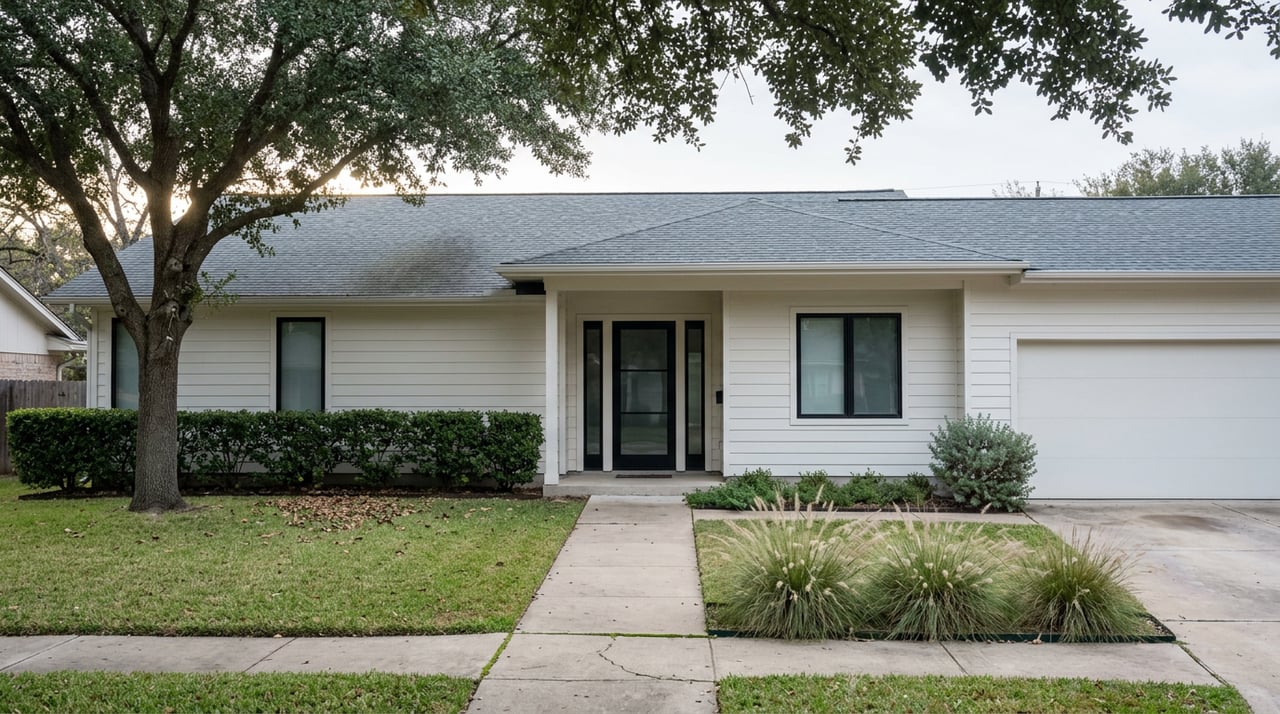
Two buyers in Georgetown sign the same seller's disclosure form this month. One is closing on a resale home in Teravista. The other is under contract on a home three blocks off the Courthouse Square. Both forms use identical language: the seller checks a box confirming they are or are not aware of any defects to the foundation. Both boxes might come back unchecked, meaning no known issues. Both buyers walk away thinking they've cleared the same hurdle.
They haven't. The Teravista buyer is sitting on deep Taylor clay that can swell 10 to 15 percent in volume when it's wet and pull away from the slab when it dries out. The Courthouse Square buyer is likely on a pier-and-beam foundation with a crawl space that has its own separate failure mode involving humidity and wood rot rather than clay movement. The disclosure form doesn't know the difference. It was never built to.
Georgetown Sits on a Seam, Not a Slab
The geology under Georgetown changes almost exactly where the highway does. West of I-35, the land edges into Hill Country terrain, where shallow limestone bedrock sits close to the surface. That limestone can fracture and shift, and the clay packed into those fractures is still reactive to moisture, but the movement tends to be more contained. East of I-35, where most of the newer residential growth has concentrated, the ground is Blackland Prairie clay, specifically the Houston Black and Taylor clay series. These are among the most expansive soils found anywhere in Texas, and they respond to Georgetown's climate swings, wet springs and falls followed by punishing dry summers, with a shrink-swell cycle that puts constant pressure on a slab.
That's the part a listing sheet never states directly. A house can look identical to its neighbor three miles away and sit on a completely different risk profile, because the ground itself changed underneath the subdivision boundary rather than the property line.
What That Split Looks Like By Address
Local foundation contractors who work across Williamson County describe the pattern the same way, subdivision by subdivision:
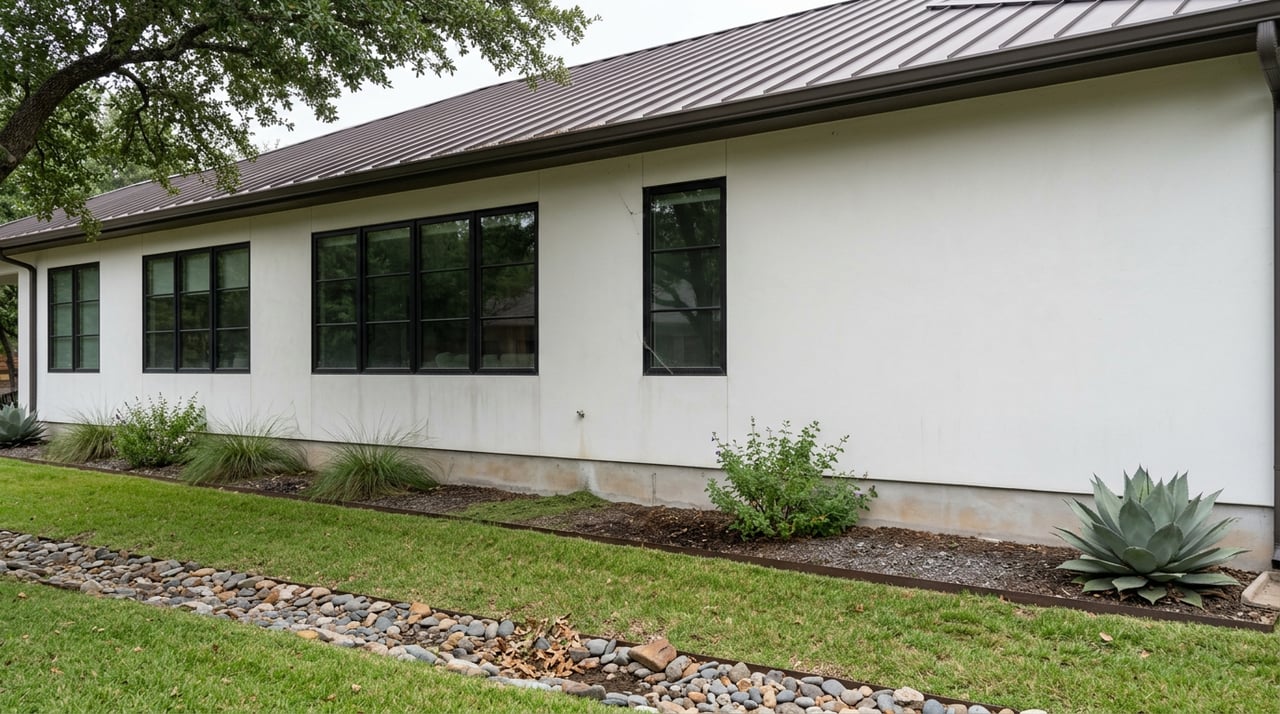
- Teravista and Georgetown Village, both east of I-35, sit on Taylor Clay and Austin Chalk formations. During a wet spring, isolated sections of a foundation here can be pushed upward by as much as two to four inches where water pools, according to specialists who service the area.
- Sun City Texas, established in 1995, now has thousands of slab-foundation homes in the 25 to 30 year range, old enough to show the cumulative effect of three decades of clay movement layered on top of extensive community irrigation, which adds its own moisture patterns around foundations.
- Wolf Ranch, despite being newer construction, isn't immune. Contractors report settlement issues tied to soil compaction differences during the build phase rather than age. New doesn't mean stable if the pad wasn't compacted evenly before the slab went down.
- The historic Courthouse Square district runs on a different system entirely. Many of these homes use pier-and-beam foundations, and the failure mode here is less about clay swelling and more about wood rot in crawl spaces that don't ventilate well against Georgetown's summer humidity, which averages 65 to 75 percent from May through September.
None of this shows up as a line item on the MLS sheet. It shows up when you know which side of the highway you're standing on.
The Disclosure Form Only Answers One Question
Texas Property Code Section 5.008 requires most residential sellers to complete a disclosure notice, and it's a genuinely useful document. But it asks a narrow question: is the seller personally aware of a defect. It doesn't ask what soil series the home sits on. It doesn't require a geological assessment. It's a retrospective, self-reported checklist, not a predictive risk profile.
That distinction matters more in Georgetown than in most Texas markets, because a seller can honestly check "no known defects" on a home that has simply not yet entered its active movement phase. A five-year-old house in Wolf Ranch built on unevenly compacted soil hasn't necessarily cracked yet. The seller isn't lying. The form isn't wrong. It's just answering a different question than the one a buyer actually needs answered.
A foundation inspection that comes back clean in August during a drought is not the same information as one that comes back clean in April after six inches of rain.
Timing Changes What the Inspector Sees
This is the part that trips up even careful buyers. Georgetown's soil doesn't sit still. During a wet stretch, clay expands and can heave a foundation upward in spots. During a dry summer, especially one that pushes past 100 degrees for weeks at a time, the same clay pulls away from the slab and creates voids underneath it. An inspection performed at the tail end of a drought will often show different symptoms, sticking doors, hairline cracks, than one performed after a rainy season, when the same house might show doors that won't latch and diagonal cracks above frames from the opposite direction of movement.
The practical implication: a "clean" inspection isn't automatically reassuring, and a flagged issue isn't automatically disqualifying. What matters is whether the inspection happened during a representative moisture cycle, and whether anyone asked when the ground was last saturated or last bone dry before the report was written.
What a Repair Actually Costs, and Why the Number Belongs in the Offer, Not After It
Once you know the geology, the cost conversation gets a lot less abstract. Here's roughly what foundation work runs in the Georgetown area, based on figures commonly cited by contractors working Williamson County:
| Service | Typical Cost | What It Tells You |
|---|---|---|
| Structural engineer inspection | $300 to $780 | An independent, non-contractor assessment of whether repair is actually needed |
| Minor crack repair | $250 to $800 | Cosmetic or early-stage fix, not a structural solution |
| Push pier (installed) | $1,500 to $3,000 per pier | Steel pier driven through the active clay zone to stable ground |
| Helical pier (installed) | $2,000 to $4,000 per pier | Alternative pier method, often used where load conditions differ |
| Full slab repair | $2,800 to $10,000 | Most Georgetown homes need 8 to 15 piers depending on severity |
The reason this table matters before closing rather than after: an unrepaired foundation issue typically shrinks the buyer pool and forces a price conversation that costs more in lost negotiating leverage than the repair itself would have. Sellers who address known movement before listing tend to keep more of their asking price intact than those who let a buyer's inspector find it first.
The Insurance Assumption That Catches People Off Guard
One more mechanism worth knowing before you're standing in a contract deadline. Standard homeowners insurance in Texas generally does not cover foundation repair caused by normal soil movement or gradual settling. That's considered a maintenance issue, not a covered peril. Coverage can apply if the damage traces to a sudden, specific event, a burst pipe flooding under the slab, for example, but the everyday shrink-swell cycle that defines Georgetown's clay soil isn't something your policy is designed to pay for. That's a conversation worth having with an insurance agent before you assume a policy will backstop a foundation problem down the road.
Before You Write the Offer
- Ask which side of I-35 the property sits on, and whether the subdivision has documented soil or drainage issues in the HOA or builder records.
- Request an elevation survey rather than relying on a general home inspection alone, especially on homes in Sun City, Teravista, or Wolf Ranch.
- Ask when the last significant rain or drought event occurred relative to any prior inspection report, since that context changes how to read the findings.
- If anything looks borderline, get a structural engineer's opinion before a repair contractor's. An engineer works for you, not for a repair quote.
- Factor permitting time into your timeline. Georgetown's Building Department typically adds three to seven business days to any permitted foundation work, which matters if repairs are part of a repair addendum before closing.
A Few Questions People Ask
Does homeowners insurance cover foundation repair in Georgetown? Generally, no, if the cause is normal soil movement or gradual settling. Coverage is more likely if the damage stems from a sudden event like a plumbing failure. Confirm specifics with your carrier before you count on a policy to cover it.
Is an older home in Sun City automatically riskier than new construction in Wolf Ranch? Not automatically. Age matters because Sun City's oldest sections have three decades of cumulative clay movement, but Wolf Ranch has shown its own settlement issues tied to how evenly the pad was compacted before the slab was poured. Age and construction quality both factor in, and neither alone tells the full story.
If the seller's disclosure says no known defects, do I still need my own inspection? Yes. The disclosure reflects what the seller is aware of and willing to report, not an independent geological or structural assessment. An elevation survey and, where warranted, a structural engineer's report give you information the disclosure form was never designed to provide.
Foundation questions in Georgetown aren't a box to check once and forget. They're a function of geography, season, and the specific history of the lot, and that's exactly the kind of local detail that's easy to miss from a listing photo. If you're evaluating a property here, or trying to figure out what a disclosure form is really telling you, Denise Arndt can walk through the specifics with you before you're standing at a negotiating table wishing you'd asked sooner.