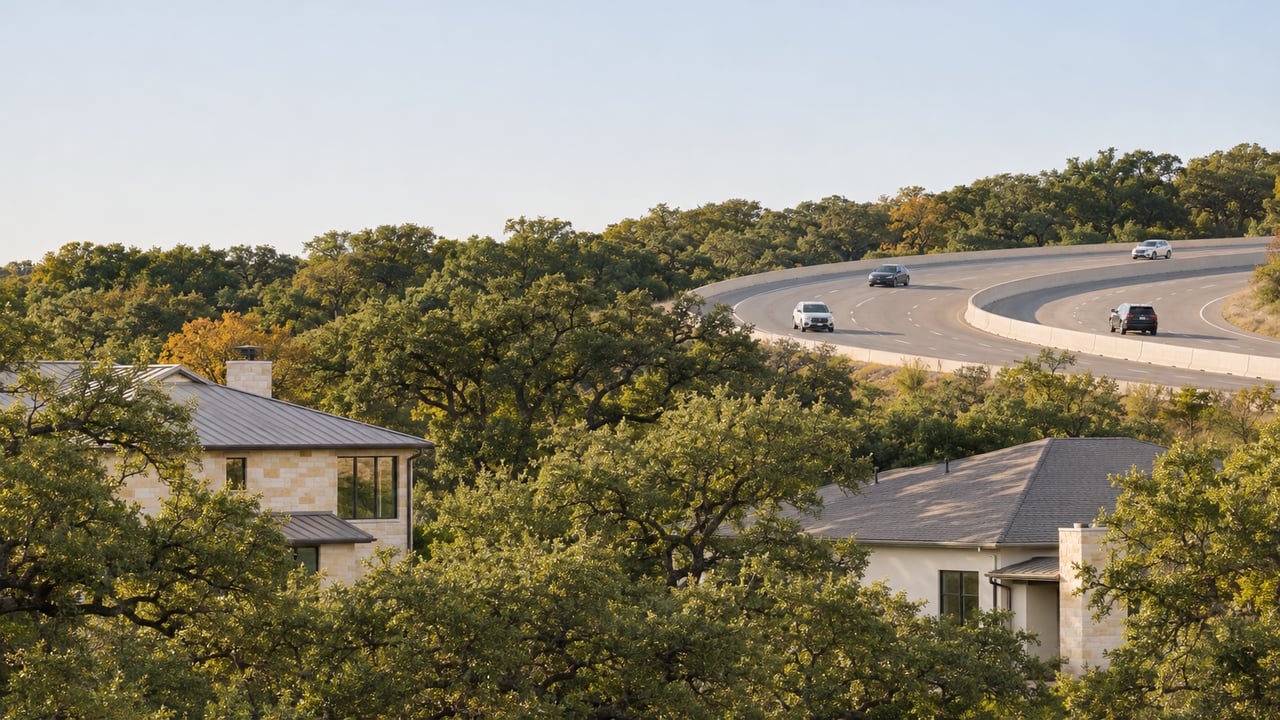
If you're heading north on US 183 toward Duval Road or Avery Ranch Boulevard, why does the number on the overhead express lane sign change from one drive to the next?
The 183 Express Lanes set their prices by demand. Rates go up when the express lanes are busy and down when they're light. That makes the price a real-time read on how busy the express lanes are. It only helps if the ramps where you need to get on and off are among the few the express lanes serve.
The Number Moves Because the Lane Is Filling Up
The 183 North Mobility Project, run by the Central Texas Regional Mobility Authority, describes the pricing in plain terms. When traffic in the express lanes is heavy, rates go up. When it's light, rates go down. Higher rates are meant to discourage some drivers from getting in, so the trip stays reliable for transit, emergency vehicles, and drivers who need to arrive on time.
The price follows demand in the express lanes, not in the four free lanes beside them. In an April 2026 report, CBS Austin said the evening rush on the 183 main lanes toward Cedar Park, Leander and nearby communities can add 30 minutes or more to a commute.
In that same CBS Austin report, CTRMA Director of Engineering Mike Sexton described how prices had behaved in the first months:
"The big thing is—prices are always going to be slightly higher during rush hour, but we haven't seen a big jump in prices and people are moving efficiently through the corridor."
For a sense of scale, the Mobility Authority told CBS Austin in April 2026 that a one-way trip through the Lakeline area cost about $0.87 with a toll tag and $1.31 without one. That was a snapshot. Because prices follow demand, the sign on any given drive is the only current number.
Where the Sign Sits and What It Covers
The project's pricing fact sheet says the price signs stand about half a mile before each express lane entrance. That gives you time to choose between the express lanes and the non-tolled lanes. Once you enter, the price you saw is the price you pay.
The corridor is divided into segments, and each has its own price, so one sign lists several destination exits with a separate figure for each. The fact sheet's sample sign shows destinations such as Duval Road, Anderson Mill Road and the 183A Toll connection toward Avery Ranch Boulevard.
The northbound price to 183A covers more than the express lanes. Northbound express lanes feed straight onto 183A Toll in Cedar Park, and the posted price includes both the variable 183 Express Lanes segment and the set price for the first toll point on 183A. Stay in the express lanes past the SH 45 North/RM 620 exit and you merge onto northbound 183A Toll.
The Exits Decide Whether the Price Matters
The express lanes are two lanes in each direction down the center of US 183 between SH 45 and MoPac, with four non-tolled lanes on either side. Delineators separate them from regular traffic, and they connect to the rest of the road at only a few points. The Mobility Authority's map groups those connections by the North Austin roads each one serves:
| Direction | Get on from | Get off toward |
|---|---|---|
| Northbound | Payton Gin Rd., Lamar Blvd., IH 35 | Anderson Mill Rd., McNeil Dr., Oak Knoll Dr., Duval Rd. |
| Northbound | Braker Ln./Great Hills Trl., Capital of Texas Hwy., MoPac general-purpose lanes, or the MoPac Express Lane connector | Lakeline Blvd., Lakeline Mall Dr., RM 620/SH 45 North, Pecan Park Blvd., then 183A Toll and Avery Ranch Blvd. |
| Southbound | 183A Toll, Lakeline Blvd., RM 620/45 Toll, Pecan Park Blvd. | Braker Ln./Great Hills Trl., Capital of Texas Hwy., MoPac general-purpose lanes, Steck Ave. via MoPac |
| Southbound | Anderson Mill Rd., McNeil Dr./Spicewood Springs Rd., Oak Knoll Dr. | Southbound MoPac Express Lane, or Burnet Rd., Payton Gin Rd., Lamar Blvd., IH 35 |
Two details on that list affect everyday trips. Heading north, Lakeline Mall Drive is the last free exit before 183A Toll. And northbound drivers who enter from the MoPac Express Lane skip Loop 360/Capital of Texas Highway, Great Hills Trail and Braker Lane altogether. To reach those roads or their cross streets from MoPac, you leave the MoPac Express Lane and take the existing connector to the 183 general-purpose lanes. A cheap price on the sign is no help if the express lane carries you past your turn.
The MoPac End Works Differently in Each Direction
The connection to MoPac opened in stages. The northbound express lanes from near Burnet Road to SH 45 North opened January 2, 2026, and the northbound direct connector from the MoPac Express Lane followed on January 31. The southbound express lanes, the southbound connector to MoPac and a southbound MoPac collector-distributor road were all open by February 28, 2026.
That collector-distributor road, which the project calls a signal bypass, changes the southbound drive. According to the project's media alert, it skips the traffic signals at Steck Avenue and Spicewood Springs Road and merges onto the southbound MoPac frontage road just south of the Spicewood Springs overpass. Drivers reach the MoPac general-purpose lanes by the ramp north of Far West Boulevard. On the project map, that road serves Far West Boulevard, Spicewood Springs Road/Anderson Lane and RM 2222.
Who Never Sees a Price
Some vehicles use the express lanes without paying. The 183 North FAQ says state law waives tolls on Mobility Authority roads for:
- Emergency vehicles
- State and federal military vehicles
- Public transit buses
- Capital Metro registered vanpools
- MetroAccess vehicles
That third item has reached a regular route. In its August 2026 service changes, as reported by KXAN, CapMetro began running Route 985 in the new US 183 toll lanes to improve travel times, with no changes to existing stops. When rising prices thin out express lane traffic, a bus in those lanes benefits, and the project names transit as one of the trips the pricing is meant to keep reliable.
Tag or License Plate Changes the Number You Pay
The price on the sign assumes an electronic tag. The FAQ lists the accepted tags: TxDOT's TxTAG, NTTA's TollTag, HCTRA's EZ TAG, the Kansas Turnpike Authority's K-Tag, the Oklahoma Turnpike Authority's Pikepass, and BancPass/PlusPass. Tag users get a 33 percent toll discount. Without a tag, a camera photographs the license plate and the bill goes to the vehicle's owner through Pay By Mail. Pay By Mail rates are higher than tag rates and add a $1 processing fee per invoice. The April 2026 Lakeline example of $0.87 with a tag and $1.31 without one shows that gap on a single short trip.
This is general information about how the corridor is designed to work, not financial advice. Check your own toll account terms with your tag provider or the Mobility Authority.
What's Still Being Finished
The express lanes are fully open, but the project isn't finished. Its major activity page says finishing work continues through the rest of 2026. That includes drainage repairs at US 183 and Braker Lane, expected to bring closures of one to two weeks on a westbound Braker through-lane and the frontage-road turn lanes. The project's travel alerts page lists current lane closures with their dates.
The non-tolled side has improved too. The fourth general-purpose lane in each direction opened early, in August 2024. Project officials told CBS Austin that since that lane opened, travel speeds have improved about 10 percent and overall travel time has dropped about 15 percent. Those gains are credited to the added free lane, not to the express lanes.
If you're weighing how a home's location relates to the Braker, Duval or Lakeline ramps, or how a commute toward Cedar Park and Williamson County works on this corridor, Denise Arndt can go through those routes with you street by street. Contact Denise for a personalized consultation.